


The short answer
Most wine cooler problems come from a short list of causes: blocked condenser airflow, a failed fan or sensor, worn door seals, a clogged drain, or a control fault. A technician can usually pin down the cause in one visit. On a built-in Sub-Zero, Viking, or Thermador unit, repair is often the more practical choice than replacement.
A wine cooler that drifts a few degrees warm or starts cycling loudly is easy to ignore until a bottle tastes flat. We repair built-in and undercounter wine storage for homeowners in Carson and nearby cities such as Torrance, Gardena, and Long Beach. Our work centers on Sub-Zero wine storage, and we also service Viking and Thermador wine units, including those installed in kitchens built around Wolf cooking appliances. Below is what tends to go wrong, what our technician checks, and how to decide whether a repair makes sense.
Issues we fix
Wine storage is less forgiving than a regular refrigerator because it is meant to hold a narrow, steady temperature with controlled humidity. These are the symptoms owners call us about most often.
- Not cooling, or running warmer than the set temperature
- One zone holding temperature while the other drifts on dual-zone units
- Frost or ice building up on the rear wall or evaporator cover
- Water pooling inside the cabinet or on the floor, often from a clogged drain
- Condensation or fogging on the glass door
- Error codes, blank displays, or controls that don't respond
- Interior lights that flicker or stay off
- Compressor running constantly, short-cycling, or clicking
- New noises such as rattling, buzzing, or a fan that grinds
- Doors that don't seal or close fully
What our technician checks on a built-in unit
We start with the basics that cause a surprising share of problems. That means confirming the actual cabinet temperature against the display, checking that the door gasket seals evenly along its full length, and looking at the front grille or rear vents for dust and blockage. Undercounter units breathe through the toe kick, so a clogged grille or a rug pushed against it can make the compressor overwork.
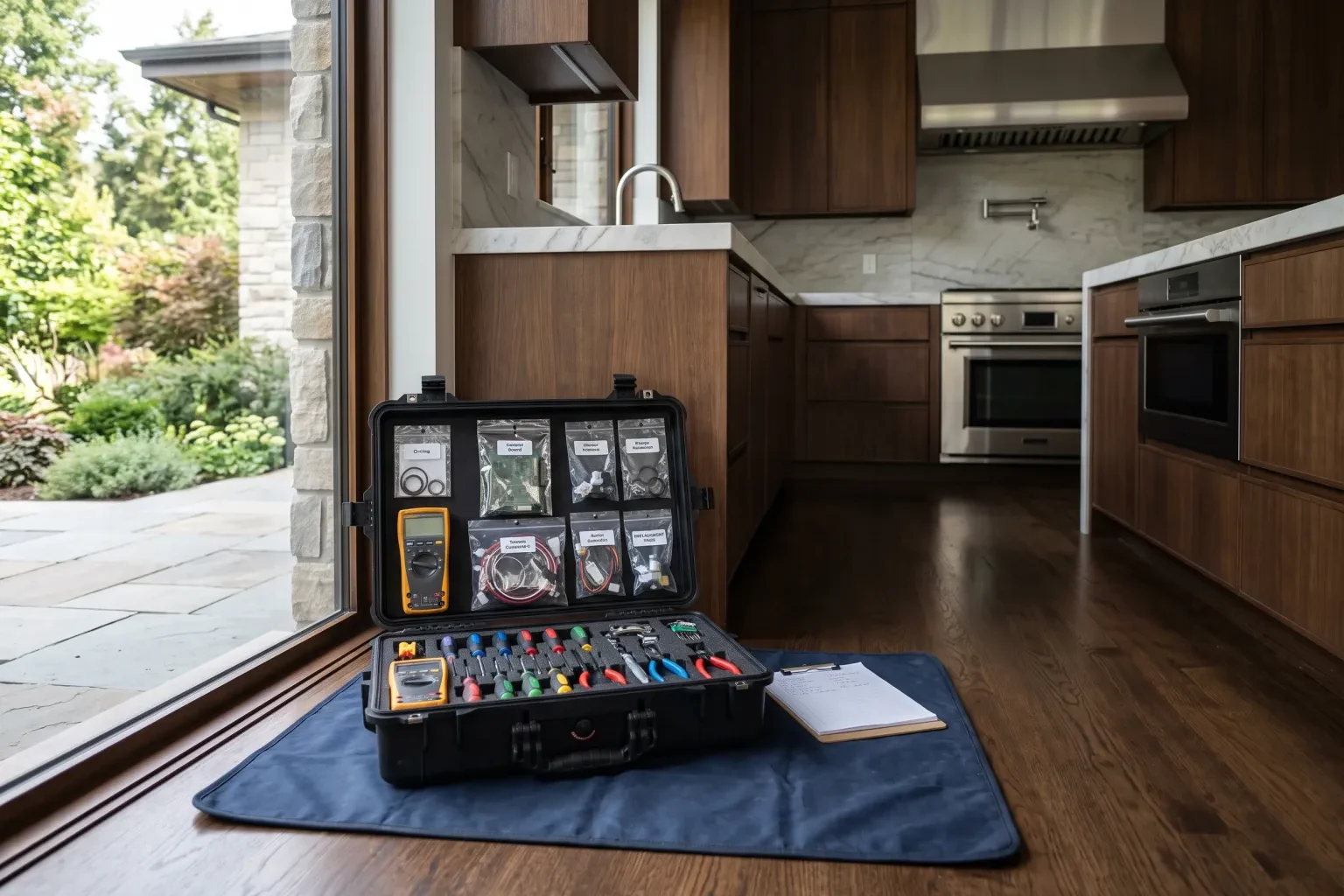
From there we test the parts that keep temperature stable: the condenser and evaporator fans, the temperature sensors (thermistors), the defrost components, and the electronic control board. We inspect the drain path and drain pan, check the door hinges and closers, and listen to the compressor and start components under load. If the readings point to the sealed refrigeration system, we explain what that means before going further.
How Sub-Zero, Viking, Wolf, and Thermador units differ
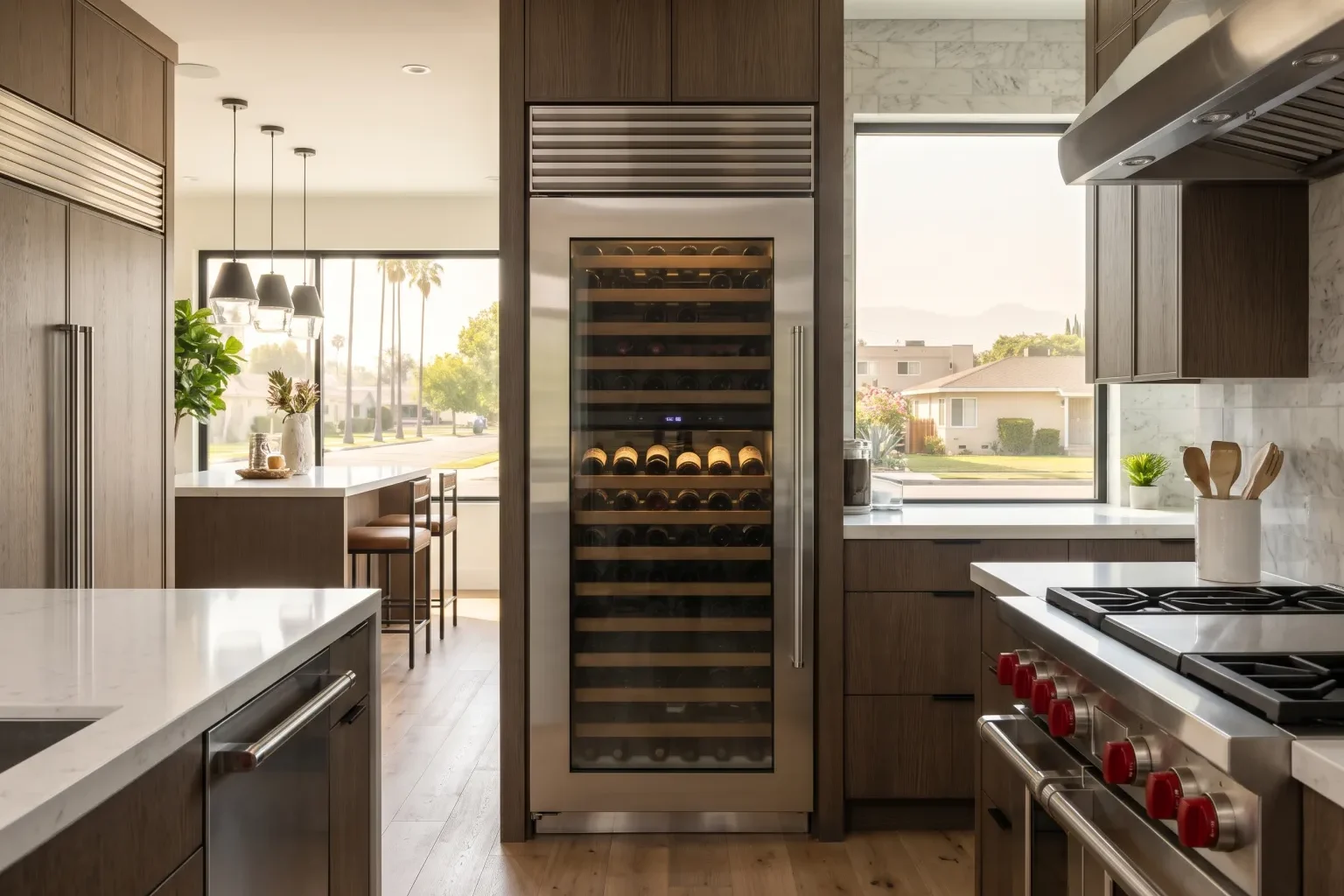
Sub-Zero builds dedicated wine storage in undercounter and full-height column formats, usually with separate temperature zones. Because each zone is controlled on its own, the problems we see often trace back to a single zone's sensor, fan, or control input rather than the whole unit. Gasket wear on the heavy glass doors and dust-choked condensers are also common.
Viking wine coolers are mostly undercounter and dual-zone. Their front-venting design makes airflow at the toe kick especially important, and fan motors and control boards are frequent repair points as the units age.
Wolf makes cooking appliances rather than wine storage, so Wolf owners typically have a Sub-Zero or another brand's wine unit next to their range. We service those wine units and can look at the Wolf cooking side of the kitchen on the same visit if needed.
Thermador offers built-in wine columns designed to sit flush in custom cabinetry. Tight panel-ready installations can trap heat, so we pay close attention to ventilation clearances, along with sensors, fans, and door alignment.
Tell us what your appliance is doing.
Repair or replace a high-end wine cooler?
Built-in wine storage is designed to be serviced. Fans, sensors, gaskets, lights, hinges, and control boards are all replaceable, and fixing them is usually far less disruptive than pulling a unit out of finished cabinetry. Replacement also means matching an exact cutout size and panel style, which can limit your choices.
Replacement becomes worth discussing when the sealed system has failed on an older unit, when the cabinet itself is damaged, or when parts are no longer available. We'll tell you plainly which situation you're in so you can weigh it against the age and condition of the unit.
What affects the cost of a repair
We don't quote over the phone because the cost depends on what we find. The main factors are the fault itself, since a gasket or fan replacement is a very different job from sealed-system work; the parts required and whether they're in stock or must be ordered; and access. A freestanding unit is simple to reach, while a panel-ready column built into custom cabinetry may need careful removal of trim or panels to reach the condenser or rear components.
After diagnosis, we explain the problem and the recommended repair before any work begins, so you can decide with the full picture.
How a visit works
When you contact us, tell us the brand, the model number if you can find it, and what you're noticing. The model plate is usually inside the cabinet along a side wall or near the top. Our technician arrives, protects the floor and cabinetry, and runs through the checks above. Once we know the cause, we walk you through the options. Many repairs can be finished on the spot. If a part has to be ordered, we schedule a return visit to install it and confirm the unit is holding temperature.
Until then, keep the door closed as much as you can, clear anything blocking the vents, and move your most valuable bottles somewhere cool and dark if the temperature is climbing.