


The short answer
Most range problems on Viking, Wolf, and Thermador units are fixable: failed igniters, spark modules, oven sensors, control boards, and door or fan issues. Our technician tests the gas, electrical, and control systems in your home and explains whether repair makes sense before any work begins.
A professional-style range is built to last, but when a burner won't light, the oven runs cold, or a display throws a code mid-dinner, the kitchen stops working. Sub-Zero Repair Specialists repairs high-end ranges in homes across Carson and nearby cities like Torrance, Gardena, Long Beach, Lakewood, and Compton. We're best known for Sub-Zero refrigeration, and we work on the cooking side of premium kitchens too: Viking, Wolf, and Thermador gas, dual-fuel, and induction ranges. We're an independent repair company, not affiliated with any manufacturer. Below is what we fix, what we check, and how a visit works.
Issues we fix
These are the problems homeowners call us about most often. If you notice one of them, it usually points to a specific part or system, which helps narrow the diagnosis.
- Surface burners that click but won't ignite, or light only after a long delay
- Burners that keep clicking after the flame is lit
- Weak, yellow, or uneven flames on one or more burners
- Low simmer that goes out or won't hold a gentle flame
- Oven that won't heat, heats slowly, or runs hotter or colder than the set temperature
- Uneven baking, with one side of the oven browning faster than the other
- Convection fan that's noisy, slow, or not turning
- Broil element or broil burner that won't come on
- Error codes, a blank display, or controls that don't respond
- Self-clean cycle that won't start, or a door that stays locked afterward
- Oven door that won't seal, hinges that sag, or a cooling fan that runs constantly
- Griddle or char-grill section that won't light or won't hold temperature
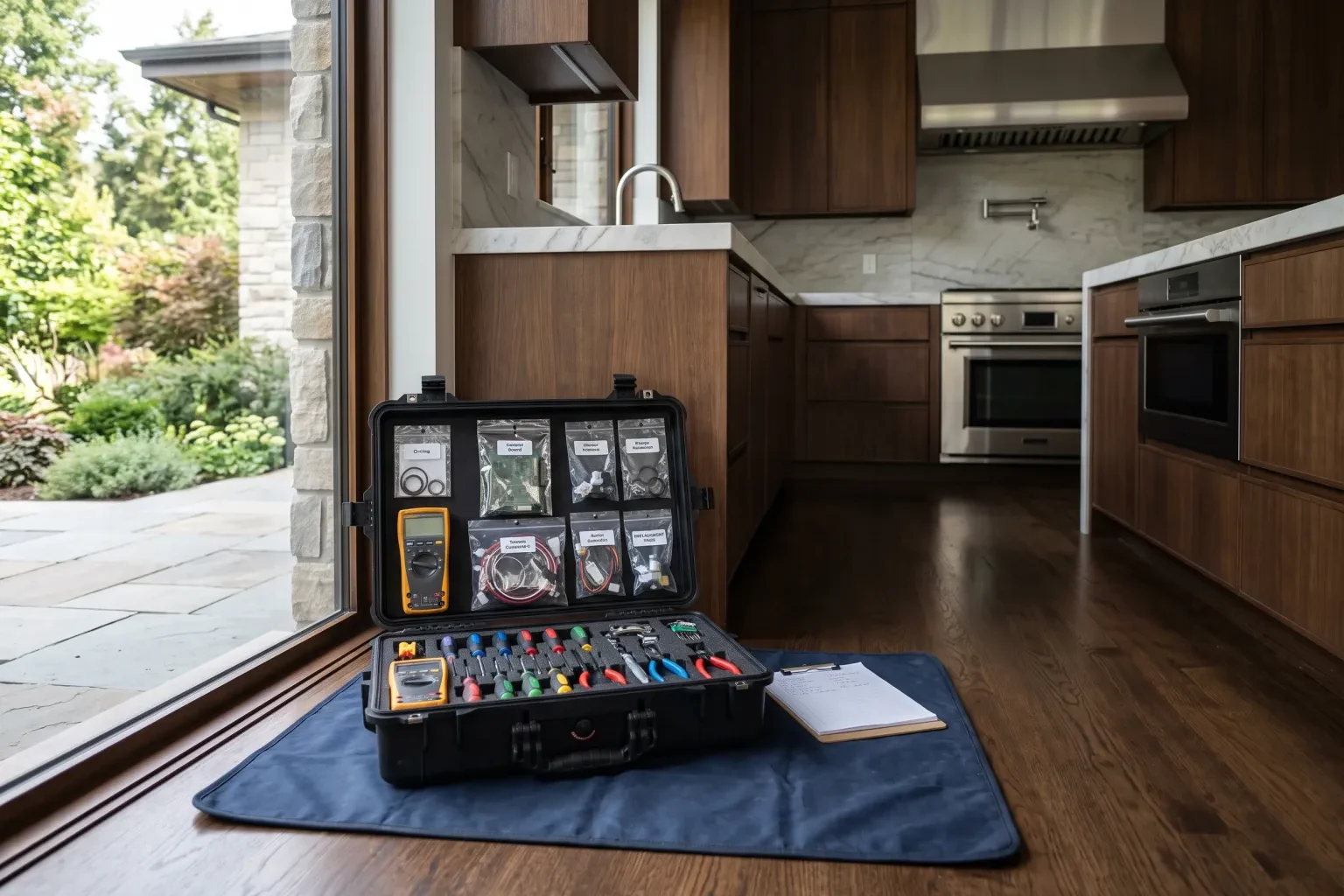
What our technician checks on a built-in or professional-style range
Professional-style ranges combine gas, high-voltage electrical, and electronic controls in a heavy, tightly fitted unit. We work through those systems in order instead of guessing at parts.
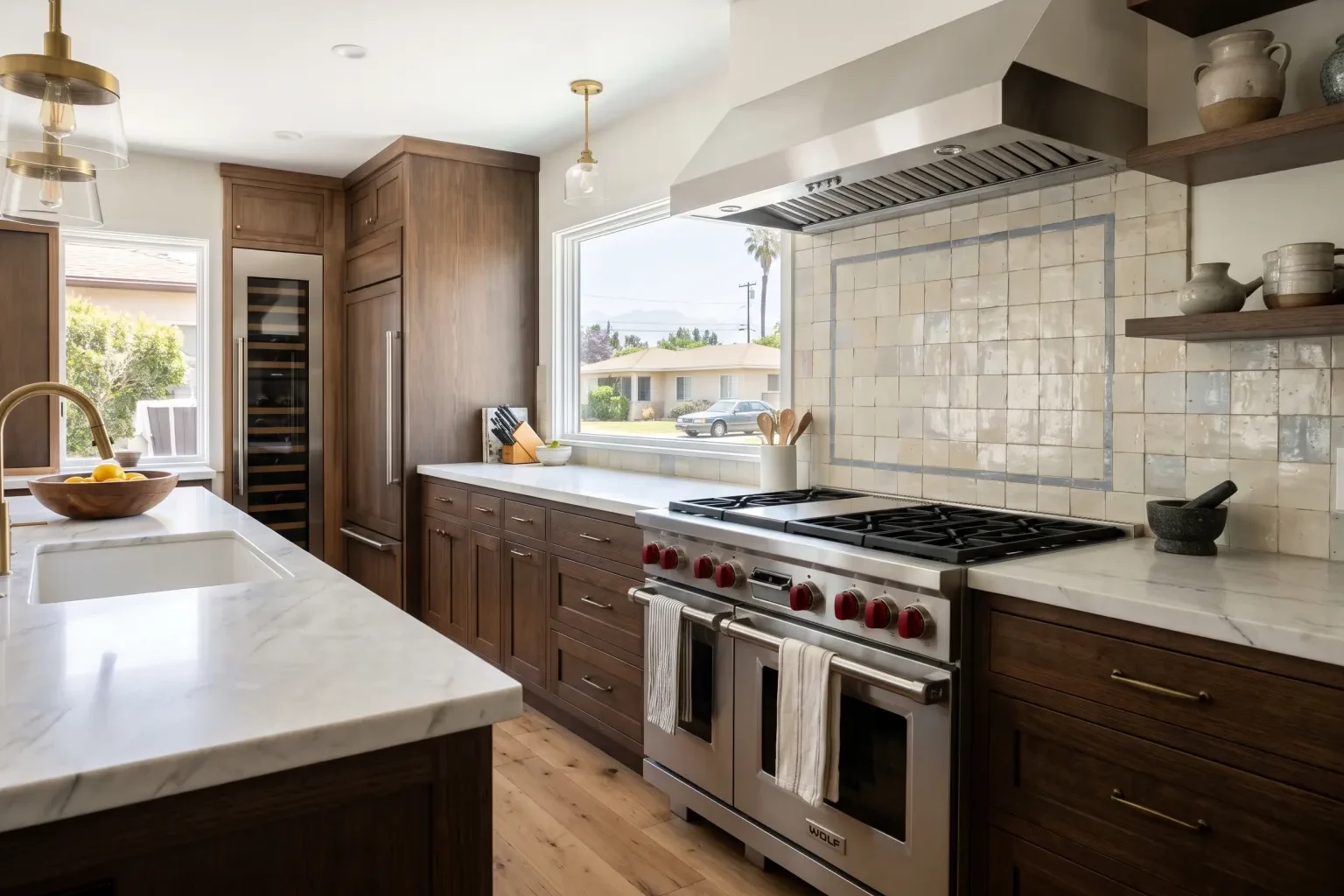
On the cooktop, we inspect burner heads and caps for clogs and misalignment, test the spark igniters and the spark module, check the burner switches, and look at the flame pattern and gas supply. On the oven side, we test the bake and broil igniters or elements, the temperature sensor, the gas safety valve on gas ovens, the convection fan motor, and the door gasket and hinges. We also read any stored error codes, check the control board and wiring connections, and confirm that the range is getting proper voltage and gas pressure.
Because many of these ranges sit flush with custom cabinetry or under a heavy hood, we also look at installation details. Poor ventilation, a pinched gas line, or a range that isn't level can cause symptoms that look like part failures. If you smell gas at any point, leave the house and call your gas utility before calling us.
How Viking, Wolf, and Thermador ranges differ in what tends to fail
Each brand has its own design approach, so the same symptom can point to different causes depending on whose name is on the knobs.
Wolf ranges come from the same company group as Sub-Zero refrigerators, and many owners have both in one kitchen. Wolf uses dual-stacked sealed burners, which give a strong high flame and a very low simmer. When the simmer flame goes out or burners won't light reliably, we often find debris in the burner ports, a cap that isn't seated correctly, or a worn igniter. On Wolf dual-fuel models, oven temperature problems frequently trace back to a sensor or a control board.
Viking professional ranges are built heavy and hot, and the high heat takes a toll on igniters, spark modules, and burner switches over time. Oven igniters that weaken with age are a common reason a Viking oven heats slowly or not at all. Door hinges and gaskets also wear on these heavy doors.
Thermador ranges use star-shaped burners and a low-simmer feature that cycles the flame on and off. When that cycling acts up, the cause is often a valve, a switch, or a control component rather than the burner itself. Newer Thermador models also rely more on electronic controls, so communication faults and display errors come up more often.
Whatever the brand, we confirm the actual failed part before ordering anything.
Tell us what your appliance is doing.
Repair or replace a high-end range?
For premium ranges, repair is usually the practical choice. These units are built with heavy-gauge steel, commercial-style burners, and replaceable parts, and most common failures involve parts that can be swapped without disturbing the rest of the range. Replacing a professional-style range also means matching a specific width and gas hookup, and sometimes refitting cabinetry or a hood.
Replacement starts to make more sense when the oven cavity or burner box is rusted through, when several major components have failed together, or when parts for an older model are no longer available. If you're considering switching from gas to induction, we can talk through what the change involves. We'll give you a straight assessment and leave the decision to you.
What affects the cost of range repair
We don't quote prices before we've seen the range, because the same symptom can have very different causes. A burner that won't light might need a cleaning, a new igniter, or a new spark module.
The main factors are the specific fault, the parts involved, and how much labor the repair takes. Control boards and gas valves generally cost more than igniters or gaskets. Some parts for older or less common models take longer to source. Access matters too: a range built tightly into custom cabinetry or an island, or one that must be pulled out to reach the back panel, takes more time to service safely. We explain what we found and what the repair involves before we start.
How a visit works
When you contact us, tell us the brand, the model if you have it, and what you're seeing, including any error codes. That helps us bring the right tools and common parts.
At your home, the technician confirms the symptoms, runs the diagnostic checks described above, and walks you through the cause. You'll get a clear explanation of the recommended repair before any work begins. If the part is on hand, we can often finish the same visit. If it needs to be ordered, we schedule a return trip once it arrives. Before we leave, we test the burners and oven so you can see the range working.
Range Repair by city
-
 Range Repair in Lomita
Local service & repairs
-
 Range Repair in Rolling Hills Estates
Local service & repairs
-
 Range Repair in Signal Hill
Local service & repairs
-
 Range Repair in Long Beach
Local service & repairs
-
 Range Repair in Torrance
Local service & repairs
-
 Range Repair in Rolling Hills
Local service & repairs
-
 Range Repair in Compton
Local service & repairs
-
 Range Repair in Gardena
Local service & repairs
-
 Range Repair in Lawndale
Local service & repairs
-
 Range Repair in Rancho Palos Verdes
Local service & repairs
-
 Range Repair in Paramount
Local service & repairs
-
 Range Repair in Lakewood
Local service & repairs