



The short answer
Most microwave drawer problems, including a stuck drawer, no heat, or dead controls, come from a specific part such as a drawer motor, door switch, magnetron or control board, and they can usually be repaired without replacing the whole unit. Our technician tests the unit in place, explains the fault, and helps you decide whether repair makes sense for your model and cabinetry.
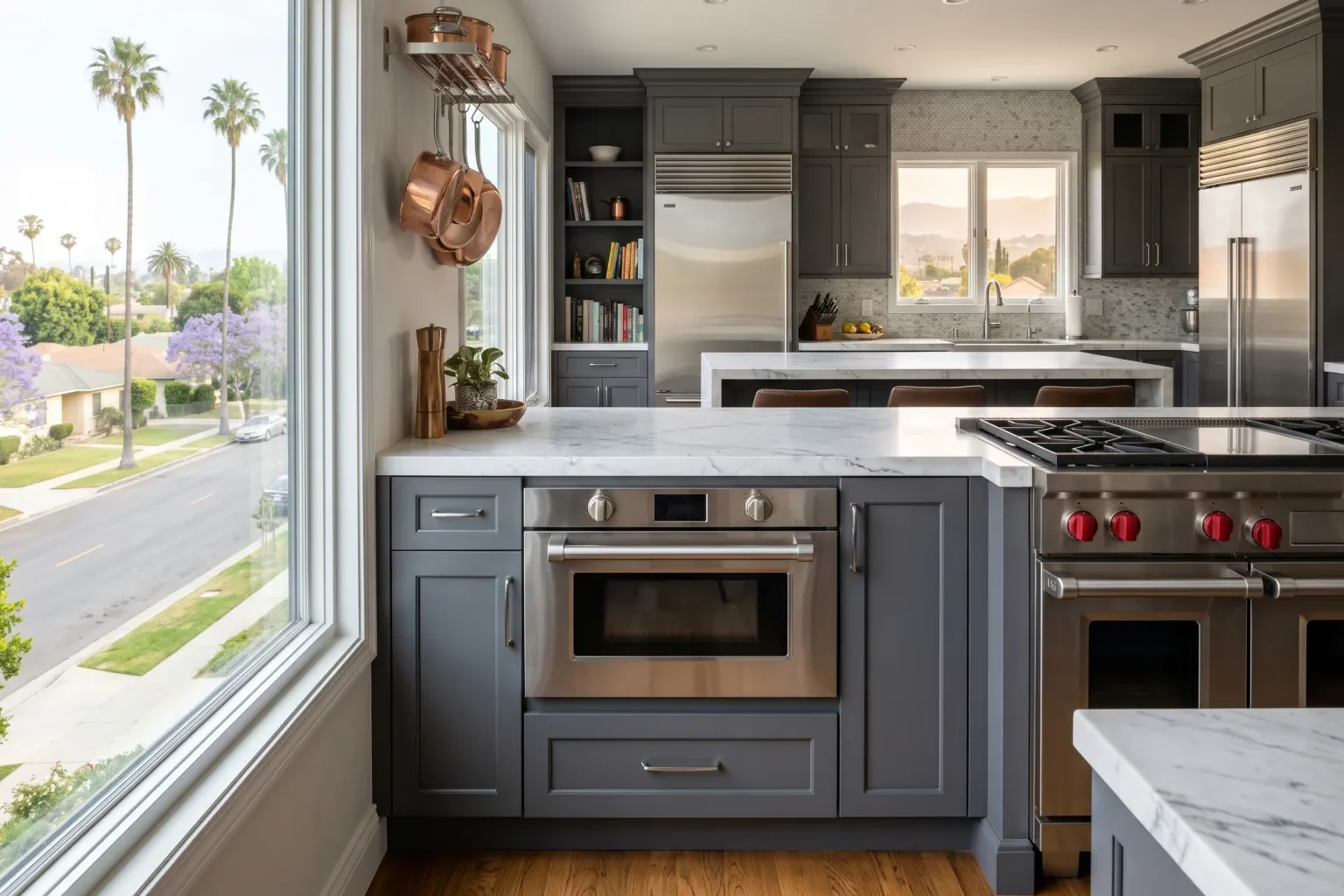
A microwave drawer sits low in an island or under a counter, opens on its own motor, and is built to fit a specific cabinet cutout. When it stops heating or the drawer won't move, you can't just set a countertop microwave in its place without leaving a gap in your cabinetry. Sub-Zero Repair Specialists repairs microwave drawers in Carson and nearby cities such as Torrance, Gardena, Long Beach and Lakewood. Many of the kitchens we work in pair Sub-Zero refrigeration with Viking, Wolf or Thermador cooking appliances. We are an independent repair company, not affiliated with or endorsed by any of these brands. Our approach is simple: find the actual fault, explain it in plain terms, and recommend only the parts the unit needs.
Issues we fix
Microwave drawers combine a standard microwave cooking system with a motorized drawer and touch controls. That means problems tend to fall into three groups: the drawer itself, the heating system, and the electronics. These are the symptoms owners call us about most often.
- Drawer won't open, won't close, or stops partway
- Drawer opens or closes on its own, or reverses direction
- Unit runs but food doesn't heat, or heats unevenly
- Display is blank or touch controls don't respond
- Error codes or flashing messages on the control panel
- Sparking, arcing or popping sounds inside the cavity
- Grinding, clicking or humming louder than usual
- Cooling fan keeps running long after cooking ends
- Interior light out, or the unit trips a breaker when started
What our technician checks on a built-in unit
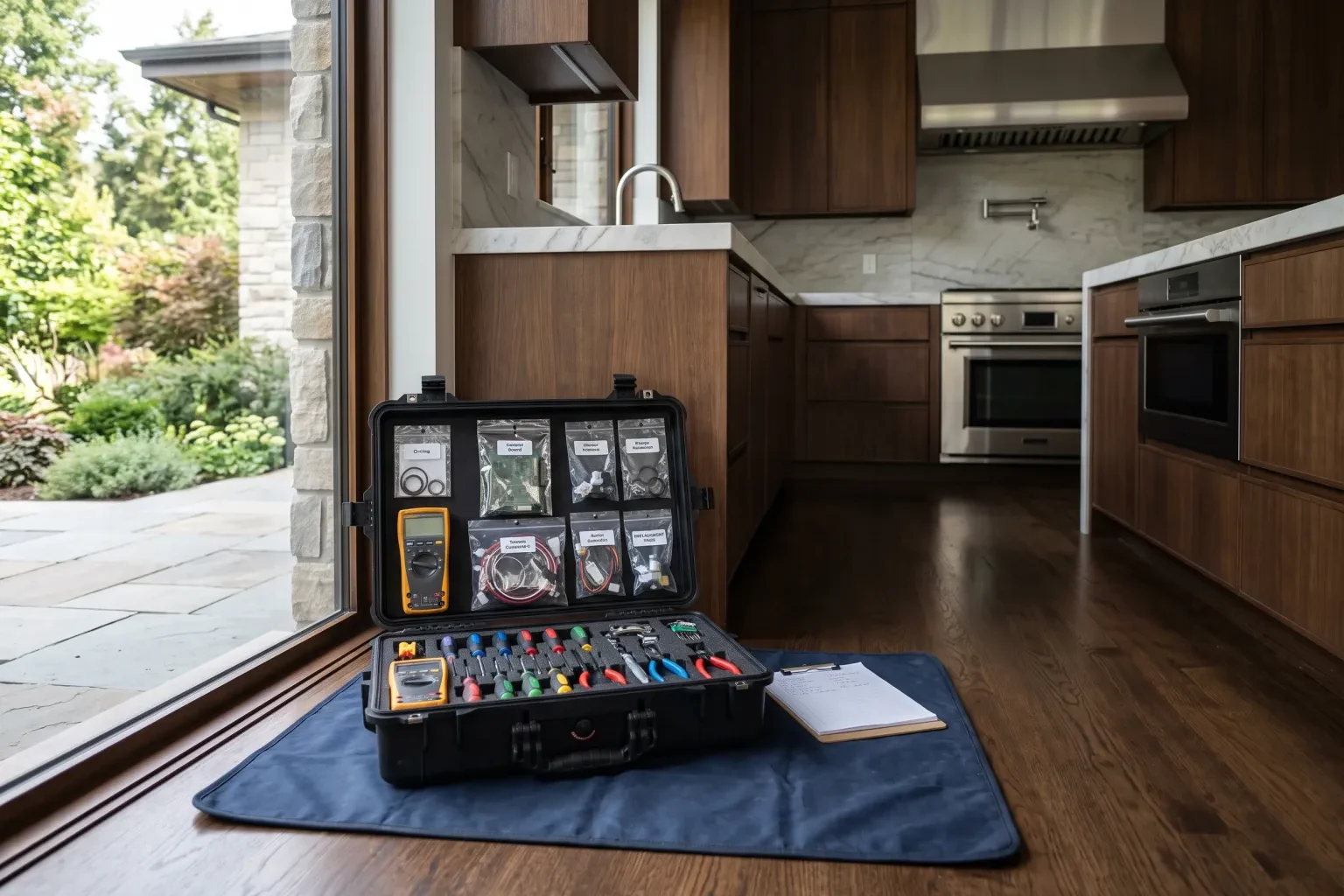
We start with the basics: power at the outlet or circuit, the breaker, and whether the unit has been reset. Then we confirm the symptom ourselves so we're diagnosing what is actually happening, not just the error code.
For drawer problems, we inspect the drawer motor, the gear rack and drive gears, the slides, and the sensors that tell the control board where the drawer is. Debris or a spill in the track can stop a drawer as easily as a failed motor can.
For heating problems, we safely discharge the high-voltage capacitor before testing the magnetron, high-voltage diode, transformer and thermal fuses. These components hold a dangerous charge even when unplugged, which is why we ask owners not to open the unit themselves. We also check the door interlock switches, which shut off heating if the drawer isn't fully sealed.
Finally, we look at the control board and touch panel, the cooling fan, the cavity cover, and how the unit sits in the cabinet. Poor ventilation or a misaligned installation can cause overheating and repeat failures.
How Sub-Zero, Viking, Wolf and Thermador drawers differ
Sub-Zero is known for refrigeration and doesn't build its own microwave drawer. In kitchens designed around Sub-Zero refrigerators, the microwave drawer is often a Wolf, since the two brands are commonly sold together. Viking and Thermador also offer microwave drawers, usually in 24-inch and 30-inch widths to match their ranges and wall ovens.
Inside, these units share a similar design: a motorized drawer, interlock switches, a magnetron-based heating system and an electronic control. The differences show up in the details. Control panel placement and layout vary, as do trim kits, drawer opening behavior and the exact parts used from one model generation to the next.
What tends to fail depends more on age and use than on the badge. Drawer mechanisms take wear in busy kitchens, touch panels can be affected by heat and moisture, and parts availability varies by brand and model year. Knowing your exact model and serial number helps us check part availability before the visit.
Tell us what your appliance is doing.
Repair or replace a high-end microwave drawer
Repair is usually worth considering when the cabinet and finish are built around your current unit. A replacement has to match the existing cutout, electrical connection and trim, and a different model may not fit without cabinet work.
Replacement makes more sense when the needed parts are discontinued, when several major components have failed at once, or when the cavity is damaged by rust or burned-through panels. We'll tell you plainly which situation you're in and why, so you can decide with the full picture.
What affects the cost of a repair
We don't quote a figure before seeing the unit, because the cost depends on a few specific factors. The first is the fault itself. A dirty track or tripped thermal fuse is a smaller job than a failed magnetron or control board.
The second is parts. Some components are readily available, while others for older or less common models take longer to find or cost more. The third is access. Units set tightly into custom cabinetry or islands may need to be carefully removed and reinstalled, which adds time. We explain these factors after diagnosis and before any repair begins.
How a service visit works
When you contact us, have your brand, model and serial number ready if you can. They're usually on a label visible when the drawer is open. Describe the symptom and any error codes you've seen.
At the visit, our technician confirms the problem, tests the relevant components, and walks you through what's wrong and what the repair involves. If parts are on hand, we can often complete the work the same visit. If a part has to be ordered, we schedule a return trip once it arrives, then test the unit fully before we leave so you can see it heating and opening properly.