


The short answer
Most range hood problems come from a worn blower motor, a failed control board or switch, grease-clogged filters and ducting, or a stuck damper. All of these can usually be repaired without replacing the whole hood. We diagnose built-in, wall, island, insert and downdraft hoods from Wolf, Viking and Thermador in Carson and nearby cities, and we service Sub-Zero refrigeration in the same kitchens.
A range hood is easy to ignore until it stops pulling smoke, starts rattling, or the lights and controls quit. Sub-Zero Repair Specialists repairs ventilation hoods for homeowners in Carson, Torrance, Gardena, Long Beach and nearby cities, focusing on the premium kitchens where these hoods are installed. Sub-Zero is known for refrigeration, and we service those units too. The hoods above high-output ranges and cooktops in the same kitchens are most often Wolf, Viking and Thermador. This page explains what goes wrong, what our technician checks, how the brands differ, and what to expect when we come out. We are an independent repair company and are not affiliated with any appliance manufacturer.
Issues we fix
Owners usually call us when the hood stops doing its main job, which is clearing smoke, heat and cooking odors. Other times the hood still works but has become loud, erratic or partly dead. These are the symptoms we see most often:
- Weak suction: smoke and steam roll past the hood instead of being pulled in
- Fan won't turn on, or runs only on one speed
- Loud humming, rattling, grinding or whining from the blower
- Fan runs on its own or won't shut off
- Lights out, flickering, or heat lamps not working
- Touch controls or buttons unresponsive, or the display shows a fault
- Downdraft vent won't rise or retract
- Grease dripping from the hood or filters
- Backdraft or cold air coming in when the hood is off
What our technician checks on a built-in or professional-style hood
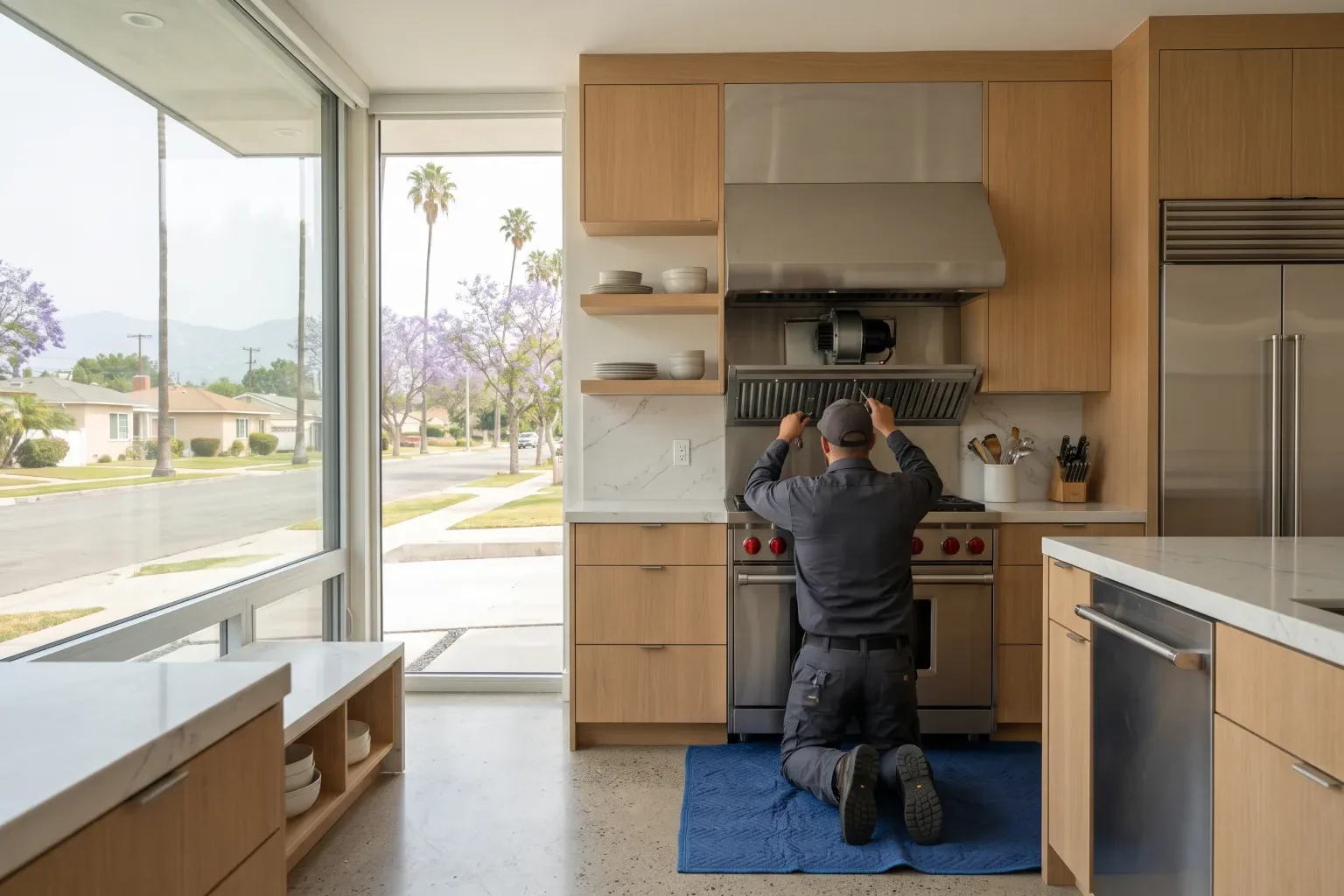
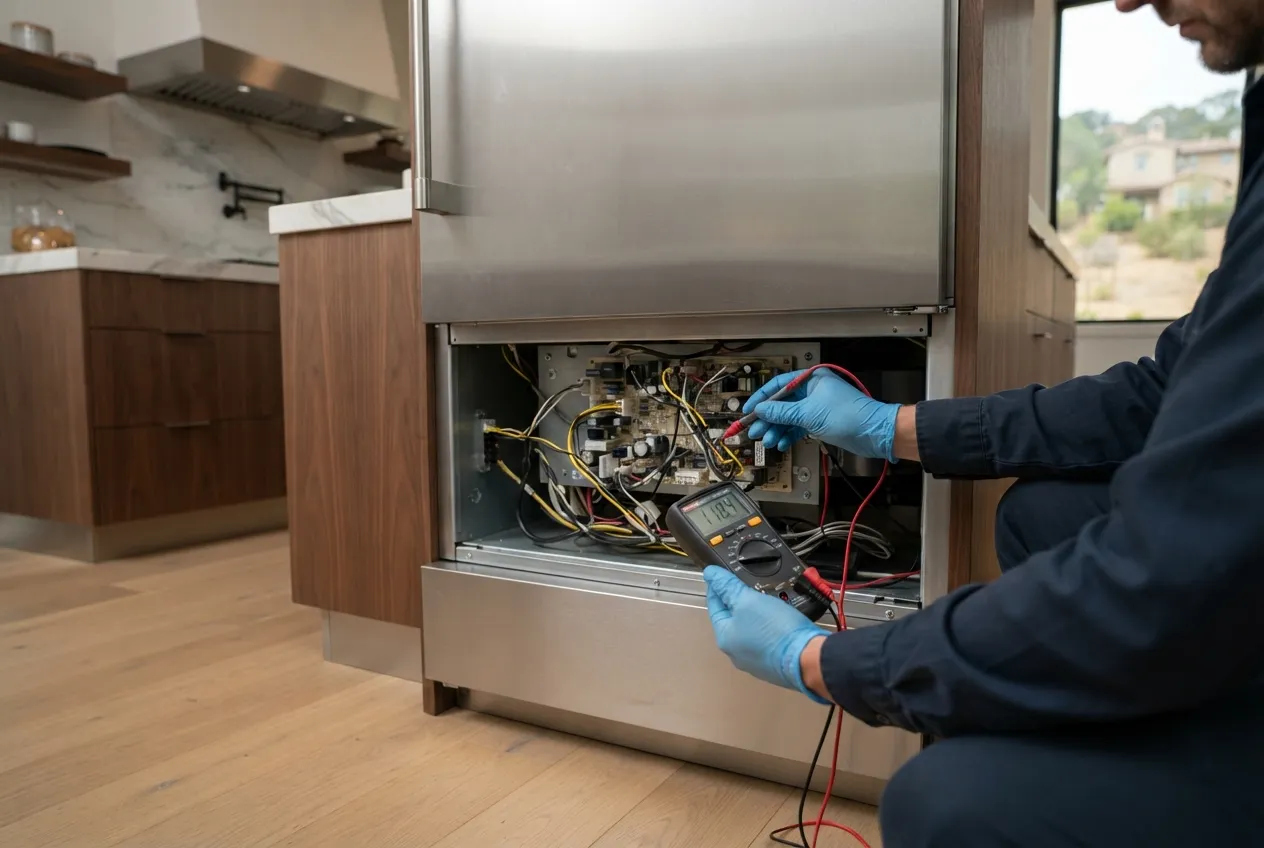
We start by confirming the symptom with the hood running at each speed, then work from the electrical supply inward. We check power at the hood, the control switches or board, wiring connections and any thermal sensors that trigger automatic fan operation. On many professional-style hoods, a heat sensor that has failed or drifted causes the fan to run on its own.
Next we look at airflow. We pull the baffle or mesh filters and inspect the blower wheel, the motor bearings and the mounting. Grease buildup on the blower wheel throws it off balance, which causes vibration and noise and shortens motor life. We check the backdraft damper for sticking and look as far up the duct as access allows for blockages, crushed sections or a disconnected run.
Some installations use an in-line or remote blower mounted in the attic or on the roof. In that case, we trace the system to the blower itself. A hood that looks fine in the kitchen can still be weak because of a failing motor somewhere else in the house.
How Wolf, Viking and Thermador hoods differ
Wolf hoods are often paired with Wolf ranges and cooktops, including downdraft systems that rise from behind the cooktop. The downdraft lift mechanism and its motor are a common service point. Wolf pro hoods with separate blower options can also develop motor or control faults that look like a hood problem but sit in the blower module.
Viking professional hoods are built for high heat output. Heat lamps, light sockets and the multi-speed blower are frequent repairs, along with switch panels that wear from years of use near grease and steam.
Thermador offers wall, island, insert and downdraft ventilation, and many models use electronic controls. Control boards, touch panels and the sensors behind automatic fan features tend to need attention, along with blower motors on heavily used units.
Across all three brands, neglected filters are the most common cause of weak suction and noisy blowers. Grease that gets past dirty filters coats the fan and ductwork.
Tell us what your appliance is doing.
Repair or replace a high-end range hood?
A premium hood is usually worth repairing. The stainless shell, the liner and the ducting rarely wear out. What fails are motors, switches, boards, lights and dampers, and those parts can be replaced. A new hood also may not match your existing duct size, mounting points, custom wood or plaster surround, or the look of the range below it, so replacement often turns into a remodeling project.
Replacement makes more sense when a needed part is no longer available, when the hood has corroded or been damaged, or when it was undersized for the range from the start and never cleared smoke well. We will tell you plainly which situation you are in.
What affects the cost of a range hood repair
We don't quote prices before we have diagnosed the hood, because the same symptom can have very different causes. These factors shape the cost:
- The actual fault: a stuck damper or loose connection is simpler than a failed blower motor or control board
- Parts: some brand-specific boards, motors and lift assemblies cost more or take longer to source
- Access: hoods built into custom cabinetry or wood surrounds, or those with remote blowers in an attic or on a roof, take more time to reach
- Cleaning: heavy grease on the blower and duct may need to be addressed before a repair will hold
How a service visit works
When you contact us, tell us the brand, the model number if you can find it (usually on a label behind the filters), and what the hood is doing. That helps us bring likely parts on the first trip.
At the visit, the technician confirms the problem, runs the diagnostic checks described above and explains the cause in plain terms. You get a clear recommendation and an estimate before any repair begins. If the part is on hand, we can often finish the same day. If not, we order it and schedule a return visit. While we're there, we can also look at a Sub-Zero refrigerator, Wolf range, Viking cooktop or Thermador oven that needs attention.